As an Amazon Associate I earn from qualifying purchases and sometimes recommend products from other sellers at no extra cost to you. For more details see my disclosure policy and privacy policy.
This post may contain affiliate links - I may make commission from any purchases.
If you’ve finished a project you’re proud of and the only place it’s living is your camera roll, Pinterest is worth a second look. It’s easy to assume it’s a platform for shops and side hustles, but it works just as well for a hobbyist who simply wants their handmade work seen.
Table of Contents
Pinterest Works Like a Search Engine, Not a Feed
The biggest difference between Pinterest and platforms like Instagram or TikTok is shelf life. A pin doesn’t disappear after a day of scrolling. People find pins by searching for what they want to make or buy, the same way they’d search Google, which means a pin from six months ago can still be showing up in someone’s results today.
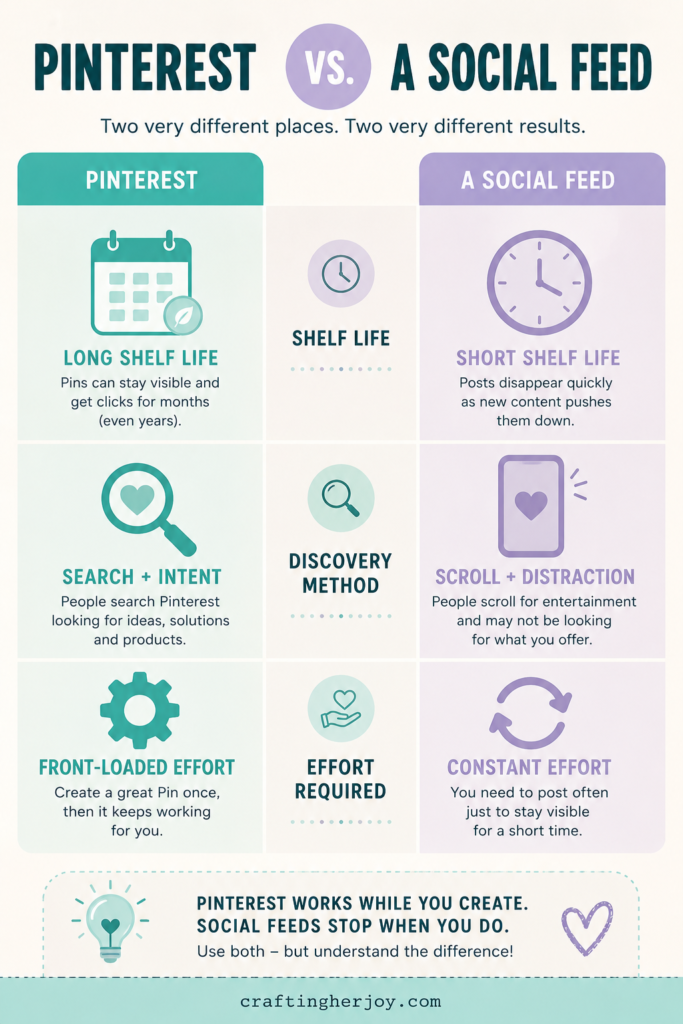
That’s good news if you don’t have time to post constantly. A well-made pin keeps working long after you’ve moved on to your next project, instead of needing constant new content to stay visible.
You Don’t Need to Be Selling Anything
This is the part that trips people up. Pinterest gets talked about as a sales tool, but visibility doesn’t require a shop, a following, or a plan to monetise anything. Sharing a finished project, a process shot, or even a tidy corner of your craft space is enough of a reason to pin.
If you enjoy seeing your work land in front of people who are into the same things you are, that’s the whole benefit. Community and inspiration-sharing count just as much as any business outcome, and there’s no rule that says pinning has to lead anywhere beyond that.
Turning What You Already Have Into Pins
You almost certainly already have content, even if it doesn’t feel that way yet. Finished projects, in-progress photos, and your workspace itself are all pinnable as they are.
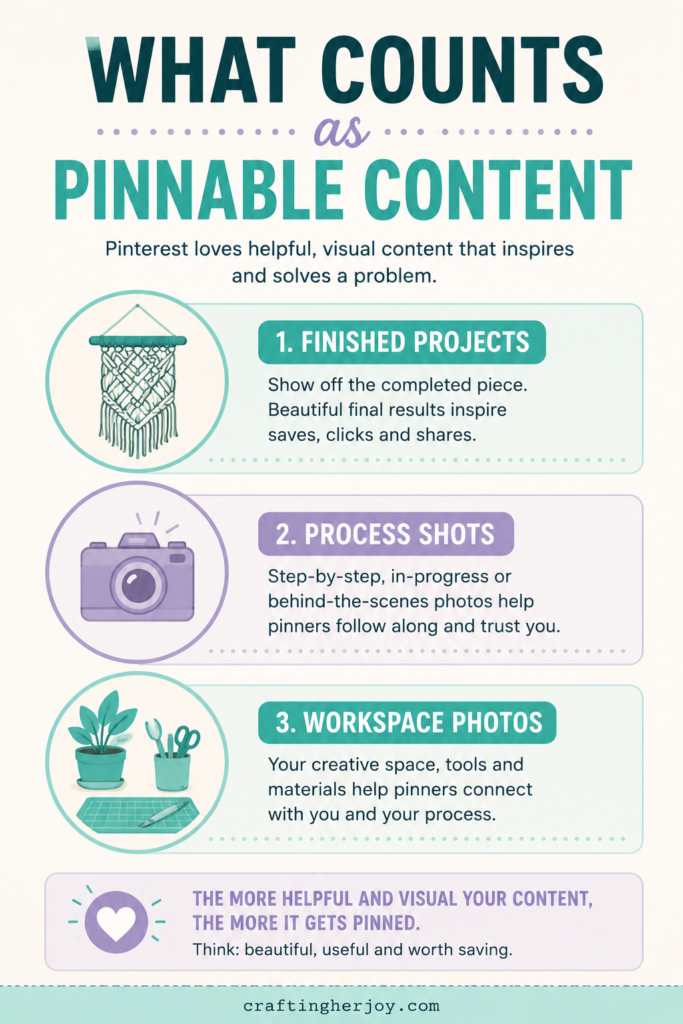
A few places to look before you think you need to create something new:
- Photos you already took of a finished project, even ones taken on your phone for yourself
- Process shots from partway through a make, which people are often more curious about than the finished result
- Your workspace or tools, especially if it’s organised in a way that might genuinely help someone else
If your photos could use a bit of polish before you start pinning them, our guide on taking eye-catching photos of your crafts covers simple lighting and styling tweaks that make a real difference without needing new equipment. And if your workspace itself is pin-worthy, keeping your craft room functional has a few setup ideas that photograph well too.
The Basics of Board Strategy
You don’t need dozens of boards to start. A handful, organised around the kinds of things you actually make or the techniques you use, is plenty to begin with.
What matters more than the number of boards is what you write on each pin. Pinterest search relies heavily on the words in your pin description, so describing what’s actually in the photo (the technique, the materials, the style) helps it turn up when someone searches for exactly that. Think about the words you’d type in if you were the one searching, and use those rather than vague or overly clever phrasing.
Low-Effort, Hobby-Friendly Pinning Habits
You don’t need a content calendar or a posting schedule to make Pinterest worthwhile. A few pins added whenever you finish something, or whenever you’re already going through your camera roll, is a perfectly sustainable rhythm for a hobby.
If you want a slightly more consistent habit, pinning once a week, even a single photo, tends to build up a noticeable stash of pins over a year without ever feeling like a chore. The point is that there’s no minimum effort required for it to be worth doing at all.
Mistakes Hobbyist Crafters Tend to Make Early On
A few habits are worth avoiding from the start, mostly because they’re easy fixes once you know about them.
Pinning without a description, or with just the project name, misses most of the benefit, since Pinterest has so little to work with when deciding who to show it to. Only pinning finished, polished shots and skipping process photos means missing content that often does just as well, sometimes better, since people are often as curious about how something was made as what it looks like. And treating Pinterest like Instagram, expecting instant engagement, misses the point of a platform where most of the value shows up slowly, over months, rather than in the first few hours after posting.
Start With What’s Already Made
You don’t need a plan, a following, or a shop to make Pinterest worth your time. Start with the projects already sitting in your camera roll, write a description that actually says what’s in the photo, and let it sit. The visibility builds on its own from there.